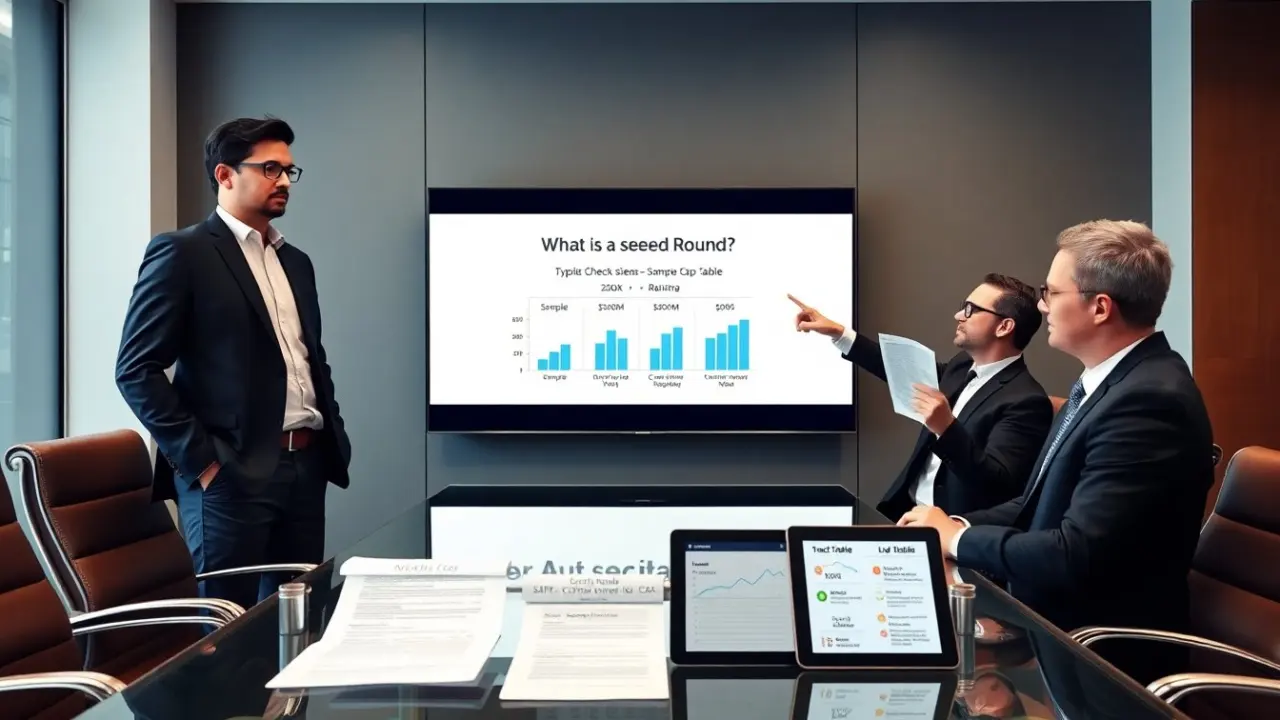
What is a seed round and why does it matter to a founder or investor? The guide explains purpose, timing, and common legal forms. It shows typical check sizes and what investors expect. The text gives clear steps founders can take to prepare. The reader will learn key terms, metrics, and due diligence needs.
Key Takeaways
- A seed round provides crucial startup capital, typically between $200,000 and $3 million, to test products and achieve product-market fit.
- Founders should time their seed round carefully to avoid excessive equity dilution or tough investor terms.
- Common legal forms in seed rounds include equity, SAFEs, and convertible notes, each impacting dilution and investor rights differently.
- Investors expect clear traction, repeatable growth signals, and a plan for the next funding stage during a seed round.
- Founders must prepare a compelling pitch, track key metrics like monthly recurring revenue, and maintain thorough documentation for due diligence.
- Building warm investor relationships and focusing on milestone alignment during negotiations increases the chances of a successful seed round closure.
Seed Round Explained: Purpose, Typical Size, And Timing
A seed round gives a startup capital to test a product and find product-market fit. Many founders ask what is a seed round when they move from idea to initial traction. Investors give funds in exchange for equity or future claims. Typical seed checks range from $200,000 to $3 million depending on geography and sector. Early-stage funds and angel groups supply most seed capital. The round usually occurs after a prototype or early user data appears. Founders use seed money to hire key roles, refine the product, and grow initial revenue. Investors look for repeatable growth signals, not perfect metrics. They expect a clear plan for the next funding stage. Valuation at seed varies. Some startups take priced rounds. Some use SAFEs or convertible notes. The choice affects dilution and investor rights. Timing matters. Founders raise seed too early and they risk selling too much equity. Founders raise seed too late and they risk higher expectations and tougher terms. The market sets norms. In 2026, seed sizes grew in some sectors and tightened in others. Founders should study local comparables. They should also prepare to explain runway and milestones. Investors will ask how long cash will last and what milestones will unlock follow-on funding. Clarity on these points answers the basic question of what is a seed round and shows preparedness.
Key Terms And Structures To Know (Equity, SAFEs, Convertible Notes, Valuation)
Equity gives investors ownership through shares. Founders sell equity and change cap tables. SAFEs give investors a right to future shares without a set price now. Many startups use SAFEs to speed deals and cut legal cost. Convertible notes act like debt that converts to equity at a later round. They include interest and a conversion discount. Valuation sets the price per share in a priced round. Lower valuation reduces founder proceeds but eases investor entry. Higher valuation keeps more founder ownership but raises investor expectations. Other terms affect control and future funding. Liquidation preferences set how investors recoup on exit. Pro-rata rights let investors keep their ownership in later rounds. Board seats and voting rights shape governance. Founders should know how each term changes incentives. They should model cap table outcomes for different exit scenarios. A clear cap table helps answer questions about dilution and future hiring equity. Advisors and counsel can explain trade-offs. Founders should pick structures that match their growth plan and investor mix. That practical view answers many versions of what is a seed round and what choices the founder must make.
How To Prepare For A Seed Round: Pitch, Traction, Metrics, And Due Diligence
The founder must build a clear pitch that states the problem, solution, market size, and business model. They must show early traction that validates demand. Traction can mean users, revenue, pilots, or partnerships. The founder must track unit economics and retention. Investors focus on metrics that predict scale. Common seed metrics include monthly recurring revenue, growth rate, customer acquisition cost, and churn. The founder should prepare a one-page cap table, a 12–18 month financial plan, and a data room. The data room should include financials, customer references, product demo, and legal documents. The founder must expect investor diligence on IP, contracts, and team background. They must answer questions about runway and hiring plans. Clear answers reduce friction and speed closing. The founder should practice the pitch and prepare templates for legal documents to save time. The founder should also identify target investors who match stage and sector. They should warm up contacts before formally raising. Warm introductions raise conversion rates. During term negotiation, the founder should focus on milestones and alignment rather than winning every clause. The founder should balance valuation with the amount of capital needed to reach the next milestones. That practical approach clarifies what is a seed round and how the founder can increase the chance of a successful close.